Peace and Love/15

II. My dear, DEAR Father

4

After my mother died I was unable to forget that voice/thought that seemed to be a message from my father. I wasn’t hearing it much but I began to think about him and, in all honesty, I wondered a little about my state of mind. Do these things really happen to otherwise sane people?

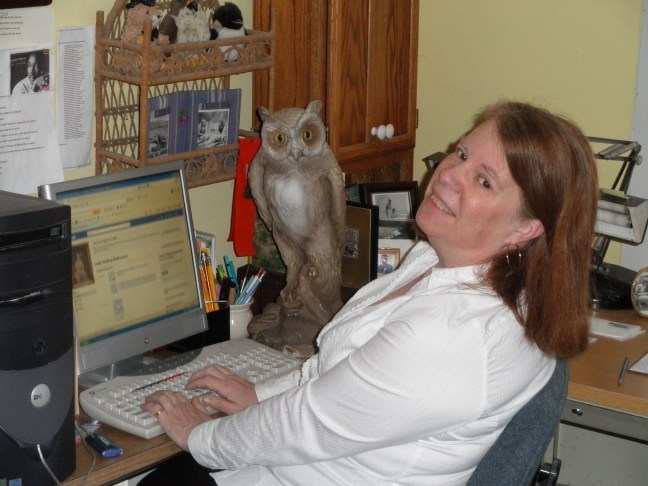
After that–my mother died in 2014–my sister went through all the family photographs and sent me some. Among those was a picture of my father as a very young man, sitting on the steps of my mother’s house on Mirror Street. Always so serious, in this picture my father was smiling. I remembered that while looking at photographs that night, four years earlier, my mother picked this one out and said that she took the picture of him. He had just blown her a kiss. Uncharacteristic of him. I asked Peter to frame it for me and it sits near my computer where I spend a lot of time, thinking and writing.

This began an unusual detective story, gathering scraps of “evidence” and by doing so, reconstructed my “real” father, the whole man, not monolithic. There were the six letters he sent me while I was away at Penn State. From the first, these letters did not sound at all like my father. They were written in a breezy, humorous style, as if we were equals. He gave me courage, admirable advice, but mostly expressed pure love. When I first read these letters they bounced off from me–I couldn’t take it all in, it was so different from the father I thought I had. I should add here that no matter what happened to me and where ever I went, I had them with me. They’ve been kept in a flimsy plastic bag. Now they sit in our safe deposit box at our bank.

Two years ago–when this detective story began–I took the letters out and read them again. There was one sentence in the first letter, sent June 22, 1968, that struck me. It said: “Remember that you and I are very much alike…” Farblundget again, only to the maximum degree. My father–my super-intelligent, wise, highly professional, and moral man–thought I was like him!! Unbelievable. But it was a big clue in finding my real father. I pondered this and came up with a thought: I was always told I was too sensitive. Could it be that he was sensitive like I was? And hid it by assuming a removed, sometimes cold, attitude? Then memories came flooding in. Once, at Friday night dinner at my grandparents’,my grandmother in her usual sensitive-as-a-toilet-seat way said “Sherry, maybe you should get a toupe? (I can’t spell this word; she meant a hairpiece.) I was sitting next to him and instead of making a wisecrack, he just bent his head and looked down at his plate. He was sensitive about losing his hair at a young age.

When we went to Nanny and Papa’s he never spoke to his parents; he never, ever attended religious services; on those Friday nights he never spoke to anybody, just walked to the same chair he always sat in, picked up the Pittsburgh Press, and hid behind it.

It was unbearably sad and piercingly wonderful, to think that I shared a link with my father, who by his own admission was sensitive, like me. All those times when my mother said that she loved him more than he loved her–she didn’t see it, maybe didn’t want to see it.

People looked up to him. His friend, Jack Swiss, with whom he played golf, openly adored my father and never got over his death. My uncle Irvin felt the same. People he worked with relied on his wisdom and strength.

Is it possible that I came to know my father better than my mother did? In another letter he wrote to me he outlined the way in which he lived his life, using logic. You line up the facts and draw a conclusion, then you don’t change your mind on a whim. It’s only when new facts present themselves that you rework your conclusion. After explaining this, he wrote: This has always worked for me but you’re probably smarter than I am.

What do I do? What do I think? Smarter than my glorious father who “manned up” any time help was needed? Nothing left to say. He’s a frequent visitor and his presence is now a part of me.

Peace and Love/14

I. My Dear, DEAR Father

Part 1

In this blog entry we enter a realm that’s not 100% physical. If somebody told me this kind of story about a parent who had died years ago, I would have thought that person was crazy and living in a delusion. But when it happens to you, what do you do?

When I was a child my father had little to do with me. We barely spoke to one another. I had been drawn into the center of the matriarchal clan, surrounded by women who loved me. My father was tall, austere, removed. We never played games, he never took my sister and me to movies, Forbes Field, Kennywood. On school picnic day my father arrived at Kennywood straight from work in one of his grey suits, horizontal lines in his forehead. He did not like crowds–did not like all the noises and smells that made Kennywood memorable–did not like the kind of food you got there–and didn’t go on any of the rides. But again, though I do remember this, I wasn’t saddened by it. I was in the middles of all the people I loved; Maxine was there, my friends from Shady Avenue, my grandmother who always sat with her sister Lillian on the benches in the shady area.

If a disciplinary problem came up, he was the one who punished and lectured us. As I grew up, though, things started to change. He talked to me more and I could sense that he liked me and he wasn’t angry when I stood up to him. This amused him; he would get a lovely light in his eyes when I demanded my rights as a teenager. I wasn’t a child anymore and I told him that. However, we did not converse much. He never asked me what I was learning in school, how my friends were, what I was reading, nor did he make any comment about my piano playing. A quiet, very quiet individual. Of course I thought he didn’t like me very much. What child wouldn’t? But there was–once again–many people closely around me who loved me and although I had periods of sadness about this, they didn’t overwhelm me.

Part 2

I didn’t know what to feel when he died so suddenly. I would get these blank, numb feelings about this but mostly I escaped as quickly as possible. There were many family problems surrounding my almost insane desire to leave so I wouldn’t have to be in an alien world, my father not present. I felt naked and exposed so when I met Mark Hoffman, I took off, into a new world, living like a real woman who had a lover and interesting books to read and living openly with my boyfriend. What an explosion this caused. I could not hold myself back, the forces at work in me were too strong. Nobody ever understood this and most family members resented me, even hated me. But I couldn’t stop myself, I was propelled into escaping to a world of my own making. My step-father said: “Leslie is ruthless.”

Part 3

Now time speeds up, decades go by, and it’s 2008. My step-father had been dead a year, Maxine died in March of 2008. I came to Pittsburgh, wanting to see Maxine one last time but I was a day late. So, staying with my mother, I attended the funeral and gave a short speech of which I was proud. Maxine would have liked it, I think. March 30 of 2008 turned out to be pivotal in terms of my family history. I decided to stay an extra day–my employer was gracious and nice about this–to visit Harold when things quieted down. It was that night that my mother and I stayed up late, looking at the contents of a cardboard box that held old family photos.

I’ve described what happened that night to many people; it was one of the most important nights of my life, and my mother’s too. We were drinking red wine and becoming a little “intoxicated.” In this box were letters written by my father when he went to Norway for something connected with his work. He wrote twice a day; there were two letters for each day, one written in the morning and one after his day was through. I was seeing, for the first time, another father–somebody totally different from the man I had known! There really are few words that can describe this; it was like being hit on the head or lightening striking my heart and soul. And during the long period since my father’s death, my mother told me continually, over and over and over–“I loved your father more than he loved me.” What daughter wants to hear this? It was naked, full of pain. I believed her, sort of. But now I sat with my mother, reading these letters that contained love and tenderness. What to make of all this? I know there’s a Yiddish word for it–farblunget. Knocked on your head so hard that you’re in a daze.

I kept trying to tell my mother this. I kept saying “Mom. MOM. Look at these letters, look how devoted he was. Don’t you think that you may have been wrong about his not loving you as much as you loved him?” My mother had little to say, and it’s my belief that she didn’t want to hear this. For what reason, I can’t say, even now. But it was the beginning of getting to know my father, decades after he left this earth.

Obviously I can’t tell this whole saga at one sitting. Some who read it will think I’m insane. However–when my mother was diagnosed with Alzheimer’s Disease in 2010 I had this thought come “from nowhere.” “What would my father want me to do?” And the answer came: “Help take care of your mother and try to get along with your sister.” Peace descended and immediately I swung into action. Starting in 2010 I went back and forth between Bloomsburg and Pittsburgh, spending time with my mother, going for joy rides all over the city, looking at our old neighborhood, drinking red wine (again) and just hanging out together. One day, we woke up in the morning, began to talk about family history and it got to be around noon. My mother said that she was having such a good time; did we have to go anywhere? I said no, we didn’t have to go anywhere and we sat and talked all day. She kept asking me the same questions, over and over but I didn’t lose patience. I was doing what my father wanted me to do.

Peace and Love/13

I’m Not Good At Letting Go.

Part 1

Sometimes letting go of anything that has or had meaning is heart-wrenching. It happens on a number of levels. People get “stuck” sometimes and if that person has a strong and loving heart—well, that person has to work twice as hard to move on. “Moving on” has been the toughest concept I’ve faced.

Professionally, when I worked as a counselor, I knew what “termination” meant. I had to experience it many times but I’ve never, ever forgotten the clients. They live in my heart and I still love them, even though I don’t see them anymore.

I was assigned to work with an adolescent girl called Arianna. It was the usual mess of her being moved around within the family because her behavior was out of control. When I met her she was a sophomore in a public high school and had been placed in foster care. I won’t even try to explain the many tragic facts of her short life. The first time I met her my heart sank and I wanted to run away. I can’t have been the only counselor who experienced that. But hey–I was a professional and I had to try. We were put in a small room near the principal’s office and somebody closed the
door.

I don’t remember what I said in the beginning of our session. But for some reason she must have asked me: “What do you see when you look at me?” Something like that. Fortunately my heart and mind work well together–most of the time, anyway. I somehow could see she was highly intelligent. Here’s my answer. While I was talking she was staring out the window.

“Who do I see? I see a lovely young girl who is very smart and very angry. That’s not a comfortable combination.”

She turned her head towards me very quickly and we looked into each other’s eyes. That was the beginning of our therapeutic relationship. Nobody had ever said that to her before, I could see plainly.

In our second and third sessions, Arianna articulated her wish to go to one of a chain of stores and I’m driving myself crazy to remember its name. It sells punk clothes, nose rings, leather pants and jackets. Some of the stuff was really very innocent. But Arianna’s foster mother would not allow it. So I said to this nice lady: Would it be OK with you if I went to (whatever it was) and reported back to you on what I saw there?” Arianna, I knew, was silently praying that her foster mother would approve and she did.

Arianna had no money so she couldn’t buy anything. She longed just to look at all this other-worldly stuff. So she wasn’t a total nerd in her own mind. It broke my heart to see how she studied the merchandise. She wanted to be cool and this was obviously what the cool kids wore.

After that, most barriers were set aside. She is a good artist and longed to have drawing materials. Somehow–I can’t remember how–I found some for her. During all of this she told me about her life. We had sessions about her mother, her father, and a beloved aunt. Arianna wanted to go and live with her. That was what happened in the end, which also marked the termination part. The aunt either didn’t want therapy for the girl or some other obstacle–I can’t remember. But I ended up saying goodbye to her on the phone. It was really awful. But she had told me that I had helped her just by validating her intelligence and talent. I just hope she’s happy somewhere out there.

Part 2

Moving on in “real life” is just as difficult. We meet people who sweep us away with their unique qualities–lovely dark brown eyes or a laid back attitude that counters your own anxieties, a fun-loving personality when you tend to be overly serious. Most of the time we can’t even enumerate what a loved person possesses that makes us want to hold on tight and never let go.

I’ve studied the works of Joseph Campbell, the world-famous mythologist, whose insights into human life and living have acted as a beacon of light in a storm of darkness. He makes things nice and simple. So in his talks about loving he tells us that the little baby cupid, flying around, shooting tiny arrows into our hearts has a much stronger,negative precursor. In Indian mythology the cupid figure is a full grown youth who has big sharp arrows in a bag on his shoulder. These arrows all have names like “death-bringer” and “torture stick.” Meaning, I guess, that when the strapping young man shoots one of his mega-arrows into you, you are injured, changed forever, damaged; the only way to reverse this process is to possess the loved one. If you cannot possess the loved one you go through life—in pain, dripping blood? How awful! But according to my mentor–Joseph Campbell–that’s the way life really is. Is he right?

Nobody’s right all the time and this is coming from an intelligent man, yes, but a man who spent his whole life in libraries and teaching at Sarah Lawrence College. I personally found this comforting because that’s the way I love. Sometimes. First love is certainly like that and had that particularly forceful effect on me. There’s a book I read called “Reviving Ophelia: Saving the Souls of Adolescent Girls.” It’s about girls like me who have loving hearts and fall too early. It’s also a diatribe which calls for a slowing down of the coming-of-age process. Big business doesn’t want that to happen!! They want girls to buy their products so they can grow up and be women. But I have only one voice and I say that I wish I had been a nerd and played sports and got dirty and hated boys…for just a little longer.

What does this have to do with letting go? It’s a very good idea to–when young– “husband” our psychic energies and if we get one of the Indian cupid’s arrows stuck into our hearts…we’ve gained the insight and guts to remove it, even if it hurts.

Peace and Love/12

…and More Laughing

I’m going to write something here that some would find cruel and definitely not politically correct. But it was part of the experience of the ten years of hilarity and fun we had.

During part of this time I was working at Devereux and I was enjoying the company of “my people.” Part of the “enjoyment” was a very special kind of humor. I never laughed at the clients. But sometimes one of them would say something so silly that it would make me laugh NOT AT THEM, BUT WITH THEM. Then I would tell P and M about it.

One of the clients I drove around with in the early mornings was a lady called Betty. I don’t think she knew she was funny but she had this one sentence she said over and over again and then she’d laugh. The sentence was “Great!! We’ll get something to eat when we get there!!” Over and over…

This was not related to anything going on at the present. I couldn’t help laughing at the silliness of it. So I told P and M this and they understood the fun side of it. They knew it wasn’t cruel. Then, every time we were getting ready to go some place, one of us would say….you guessed it. Then came the giggling. Life was so much fun with my people. One time, Betty called me a “chicken head” whatever that meant. It didn’t mean anything!!!

Also I had David whose diagnosis was “atypical psychosis,” meaning, I gathered, that nobody understood what was wrong with him. He had the most bizarre behaviors–it would be impossible to describe it all. He was not violent. But he made two sounds which were not words. Over and over he’d say “D..I..E” over and over and over and over..of course one would think that he was trying to say “DIE” but that’s not correct. He didn’t know what words were. He was OK in the van like they all were. But another weird behavior he had was drinking fluids. At dinner he’d try to grab all the other clients’ juice and water. So you had to have an eye out for this. He knew where all the drinks were stored in the basement–and of course he knew where this was–and the closet was firmly locked with a key. He’d go down there and he kept trying to open the closet door. And when we went food-shopping: one staff member unloaded the boxes of cans of juice and soda with David watching like a hawk. As everybody said: THEY MAY BE CRAZY BUT THEY ARE NOT STUPID. He’d sometimes find a way to steal a drink as we were putting groceries away. He was very strong and very quick.
The joy of our family life was fed by the joy I experienced at Devereux. I must say once again that the three of us laughed, not at these poor lost souls, but at the incongruity of life and the fact that there was joy at Devereux, something nobody would believe. Most people think my job was yucky and horrible and dangerous. At times, yes. Maxine certainly thought so. But I’m glad I had the guts to throw myself into it and find what happiness was there to be gained. And of course, at home, when one of the three of us wanted to be funny in some way we chanted: “D…I…E…”

Peace and Love/11

…and Laughing

I’ll bet that if you asked a bunch of people–maybe taking some kind of a survey–what was the best time you had with your family? Was it a special vacation or a period of time when all members were functioning well and the family was in harmony?

If somebody asked me that, I could truthfully say: from 1992 to 2001. The three of us, Peter and Michael and myself, spent a time that lasted ten years and maybe more, having fun together. This went on every day, every week, etc.

I’ve written in the past that Michael became an adolescent the minute he turned 9. That’s when Peter and I felt the boundaries dissolving and we included Michael in our world. We did nothing inappropriate. But we watched the same movies together–lots of car crashes, dead bodies, desperate and perverted people. We looked at each other and shrugged; we didn’t think anything really bad could happen to Michael. I’ve told others this and I was told that it all lay in our attitude; Michael, with his intellect, knew it was all made up.

We had many secret words, codes, jokes, and even a special funny face for any occasion. Movies we liked? Die Hard, Die Hard 2, The Jackal, Galaxy Quest (our favorite,) anything with Alan Rickman, Harrison Ford, Tommy Lee Jones, Sean Connery, Morgan Freeman, Ralph Fiennes. Shakespeare In Love, anything about cowboys and horses and guns. Lots and lots of dead people. Please note that there was only one romance–Shakespeare In Love. All of the rest with “love and relationships” we did not like. And here I’m forced to admit…our eating habits on the weekends were awful. Junk–junk–more junk.

We also liked “Are You Being Served?” on PBS. We watched them over and over until we knew whole parts of dialogue from them. Some of our favorite words came from there.

Holidays were incredibly hilarious. On Thanksgiving we’d drive down to Cape May, New Jersey and we’d always stay in the same B and B. It was called Albert Stevens Inn and the people there loved cats. Michael would bring his journal, take long walks along the beach, find places to sit and write. He had enough good instincts, street smarts, and powers of observation to keep safe. Then the three of us would take the ferry that connects Cape May with Lewes, Delaware. Michael sat alone, watched the sea,and did more writing; I’d sometimes sit with him and go into a dream, watching the water; Peter would climb up to the top with his binoculars and observe the natural world. Never was there competition, jealousy, somebody feeling left out. I don’t know how this happened but it’s true. We all loved each other so very, very, much and couldn’t get enough of each other’s company. I say “loved” as if it all happened in the past. We still do love each other very much but Michael has moved on, as is the right thing to do. But when I feel low I remember that I laughed for ten years straight and my husband and son loved me intensely, always trying to find ways to make me happy.

Peace and Love/10

Gratitude

We come to know different kinds of love in different situations. I know that when I was young on Shady Avenue Ext. my closest friend was Naomi who lived up the street. We never said “I love you” to each other but we loved each other anyway. Never jealous, we didn’t compete–in fact nobody competed with anybody else on our street but that’s a different subject.

And the love I had for my cousin Maxine was in a class by itself. This is the same with another cousin of mine.

However, there was someone in my life who loved me and I wish I knew where he was so I could tell him this. I met Lee Goldstein when I was 15. I pretty much liked all boys then but Lee fell for me and never stopped loving me for the next ten years. It sounds so strange to read that but it’s true.

Every time I needed someone he appeared. We went out together in between the times that I was involved with somebody else. How horrible that sounds!! It was just that he loved me more than I loved him. I do not think I loved him at all for those ten years. I can’t kid myself about that.

Lee’s family had a lot of money. They had started a family business which became wildly successful practically overnight. Lee drove a nice car, always had money to take me to the best places–and of course my parents adored him. I kept telling myself: “Just try a little harder. Maybe you’ll come to love him. How happy everybody would be!!” Even our initials were alike.

After my heart got pulverized in my senior year at Allderdice, Lee rushed in. He was a freshman at Penn State; when I called him and asked him to take me to our senior prom, he practically cried. He said he had a ton of school work and exams coming up and couldn’t leave. When I chose Penn State for myself, it was mostly because Lee was there. A ready-made boyfriend. Could a girl ask for more? This is a good time to add that I wasn’t thinking about career plans or courses to take.

I remember clearly the day that Lee drove over to pick me up to go to Penn State. He carried all my luggage, was polite to my parents and my father, I know, felt assured that I was safe with Lee. So, so perfect…

We had it all planned out. We were going to get married, etc., etc. The trouble was that I didn’t love him and my heart still hadn’t healed from the stomping it got the year before. But we tried…and tried. One thing I respected about Lee–among his other attributes–was his devotion to his studies. He worked hard and got good grades. He lived in a house called a “quiet dorm.” No loud music, no chaos, just young men who wanted peace and quiet to read and study. The other boys there were all nice.

But something brought all of this to an end. There was a party at Lee’s quiet dorm and we were there. I was not always at my best in crowds and I was feeling shy. Lee kept hissing in my ear to “be nicer to people” and “be more outgoing.” Well, since I didn’t love him it didn’t take long for me to let the whole thing crash down around me. I left the house and walked, late at night, across the whole campus and back to my room. Feeling sicker, I swore off all boys/men forever. But my father got sick and died right after this and I forgot Lee. He didn’t even come when we were sitting shiva.

This weird story of how love can drive you crazy–it has a strange ending. After Mark and I broke up I found out that Lee was a law student at Duquesne University and I called him. Oh how awful to have to admit this (which is why I’m writing this, as a form of apology) but I was definitely on the prowl for somebody to make all the horror and mess of Mark and me go away. (Mark had a nervous breakdown and I couldn’t handle it.) So Lee shows up at my mother and step-father’s house, as usual driving a nice car and dressed well and he takes me out to Tambellini’s. So perfect. My heart was beating and I was thinking that here’s a chance, a real chance at happiness after the last five years of chaos. 1968 to 1973–beginning in my senior year of high school up until Mark–Lee with his splendid manners and fat wallet had the power to take care of me. He took me to see his apartment and opened a little wooden box, holding a picture of me. I was ready-ready-more than ready…but everything suddenly stopped. It all fell to pieces. So Lee took me home and that’s the last time I saw him. Lee, wherever you are, I appreciate your having loved me for so long and carrying my luggage out to your car and whisking me off to Penn State.

Peace and Love/9

This is the dawning of the Age of Aquarius…

In the late 1960s people my age were getting free from parental domination and fear of pregnancy. The music all around was explosive, mind-shattering, the opening of an inner ear.

But I felt left out of it. My father died suddenly at the end of 1968 and not too long before that, my heart was shattered by the loss of a first love. While people were tie-dying T shirts I was stuck in a suburban wasteland with my mother and sister. My mother and I had little between us nor did my sister and me. Not far away, a very few miles away, was the University of Pittsburgh where students my age lived in shabby apartments in South Oakland, playing loud music and having fun.

I met Mark Hoffman in the beginning of my sophomore year, September of 1969. We fell in love very quickly and all the repressed emotions within me burst free. Healing of the pain from the past was imminent. Here was a new love, obviously very intelligent, hard-working, well-read, from New Jersey which was almost a different culture. Mark knew things, fascinating things about music–he was a big fan of Bob Dylan and The Band. Most importantly he introduced me to Hermann Hesse, the German writer. Mark had read all his books and I practically consumed them in my quest for healing of the emotional pain from the not too distant past. The novel Steppenwolf provided the key to my inner self and I owe Mark endless gratitude for giving it to me to read. I wrote a poem once called “A Boy Gives A Girl A Book.”

After a lot of unpleasant family arguments I separated myself and moved out. Mark and I began living together in the spring of 1969. We lived at the end of Atwood Street in Oakland.

Yes, we were rebels in some ways but we didn’t drink, didn’t take drugs, and I was very careful about getting birth control pills. Mark worked hard at everything he took on and I did, too; we both had part time jobs. We were swept up in our new freedom, unlimited sex, even taking some courses together. I remember walking slowly down Atwood Street to the University campus, just breathing in the sweet smell of marijuana–I didn’t smoke pot until I was much older. I was “high,” though, on freedom from family ties, also free from the end of high school with nobody taking me to the senior prom. That seemed childish now. I was a woman now.

No, we shouldn’t have gotten married. We were meant to be comrades and students together. How many times have people said that? Oh well. There was a time while still a student that I got really interested in Russian history and literature. Mark and I took some of those courses together, discussed them for hours. We loved taking long, long walks through Pittsburgh at night and pouring out our ideas about writing and philosophy. I loved those times.

Peace and Love/8

The Story Of Ashley

There were three group homes on the Devereux campus where I worked; one was for men, one for women, and a third, full-sized house for Ashley.

Ashley wasn’t mentally defected nor was she psychotic. She had about six diagnoses and took a small mountain of pills three times a day. She was what used to be called highly neurotic and very high strung. She was fragile.

I was to learn a lot of ugly things about the families of “my people.” These families were angry, or frightened, certainly embarrassed by the fact that their son or daughter was abnormal. Denial was a part of it also. These facts were most noticeable on holidays. All of the families lived close by but at holiday time the clients were left to spend those days with the “direct care staff.” I never worked on holidays in the group homes; I didn’t have to. I only put in extra hours when it was convenient for me since I had a regular day job there. I found all of this heart-breaking and sometimes unbelievable. But then there was Ashley.

Ashley’s parents lived in Connecticut and had to be very rich. They paid Devereux a fortune to house their daughter in her own private house on campus. This was such a new world for me; it took me a while to piece these things together. When I worked with Ashley and her mother would call on the phone I tried to be extra-nice; in reality I disliked her but I was nice for Ashley’s protection. I didn’t want to cause any trouble.

The first time I met Ashley she had an immediate effect on me. She had red hair and could have passed as my little sister. She was so very frail that she also brought out my maternal instinct, no small matter in my case. Finally, she looked and acted like a girl friend I had a long time ago, someone I had loved a lot.

Ashley could never be left alone; there was somebody assigned to watch over her, three shifts, every day. A problem emerged because she was too highly functioning to go to any day program where she could learn skills and socialize with others. So the days dragged. She had a membership at the local YMCA and she liked to exercise; she loved shopping and eating out.

Whenever a Saturday shift person was needed with Ashley I signed up. Often, if a double shift would open up–3 PM to 11 PM, then the “overnight” shift tacked on–I’d sign up for both. Long hours but it never seemed that way because we loved each other’s company. We shopped together, talked a lot, plus I let her have some of the foods that weren’t usually allowed…junk food. I’m glad I broke those rules–it made us both feel good. She told me I was her favorite worker which meant a great deal to me.

The last shift I worked at Devereux was a Saturday afternoon with Ashley. I made up my mind to not tell her I was leaving. I knew her well by then and I knew she’d go into one of her fits of crying. I probably should have said goodbye but this was my downfall as far as working with the people at Devereux. I had done so much hard work there, gave the job everything I had. I just couldn’t bring myself to do what was needed. I forgave myself and I hope Ashley did too.

Peace and Love/7

On The Road

2

I’ve tried over and over to fully describe this part of my history at Devereux. Yes, I had the patience to deal with these sad souls and I wasn’t put off by the nasty side. I loved them. But driving the huge van with “my people” around to all their day programs–that was special.

It’s always wonderful when you fear something, then you find out it’s easy and there was no cause for your fear. That was me and the super-sized van. I got to the house at 7 AM, helped get the clients get ready, then lined them up to get into the van. I was to learn soon that once they were in the van and riding, they were calm and easy. But I didn’t know that at first. To me it was a scary situation. What if one of them had a fit or attacked another rider? I mentally prepared myself for this situation. But it never happened.

None of the early-morning people I dealt with were not nasty or mean to the clients or criticized me for not being on time. They all knew that tying a shoelace could take a half hour. So around and around I went, taking the clients to their places. It came to be a magical sequence of events. Most people would not believe this but some of my clients were funny and made me laugh. They would say humorous things. Finally, there was a radio station in Philadelphia that would play non-stop jazz pieces from 9 to 9:30 AM. That came when I had unloaded all but one lady who had to go to a more distant day program. She was always quiet in the van. So I drove slowly, enjoying the ride and the music. Sometimes life is kind to us.

Peace and Love/6

On The Road

1

When I went to work at the Devereux Foundation, a huge mental health facility that had campuses all over the Philadelphia area, I was offered a full time job, working with troubled children and their families. These were tough cases and lots of times I felt overwhelmed by the sadness and chaos present. I had a few successes, though.

Devereux also had many group homes on their campuses where mentally challenged men and women lived. There had to be several “direct care” people around the clock to watch over these lost souls. It was impossible for Devereux to find enough people who wanted to do this work. On the surface the tasks were “yucky,” and difficult. Certainly on the weekends there were always shifts to be covered. Five days a week the people went to “day programs” so that there was nobody needed in the houses. Day programs, I eventually learned, were places like United Cerebral Palsy that provided shelter, and efforts were made to amuse the clients. Some of these places were just awful and I could hardly stand to be there. The high functioning clients went to “sheltered workshops” where they would get paid for doing what we would consider the most boring jobs in the world.

I learned that if I wanted to make extra money I could sign up for weekend shifts or evening shifts as well. The money was time and a half. At first, when I went into these places, I was frightened and felt as if I couldn’t do what was needed. Almost all the employees had black or brown skin, mostly from Africa and the island groups; few white people worked there. In the beginning I felt horribly awkward. I could tell that most black and brown skinned employees didn’t trust me. Also, it was obvious that white people had treated them badly. Finally, they were all sure that I wouldn’t be able to handle the work–to put it delicately, some clients were “incontinent” and messes had to be cleaned up; meals had to be cooked that would feed eight people and some of these people were sloppy in their eating habits. On top of all of this was the fear I had of driving the huge, super-sized vans Devereux had for transporting the clients.

Why go on when it was so sad and disgusting (at times?) I was making decent money in my day job and I didn’t need to do this. But–I did, in fact, love the work.

It did not take me long to find out that I had the “heart for it.” That’s what people told me. It happened naturally. I had to admit to myself that I was gifted with patience and a strong stomach–BOTH were needed!!