Pittsburgh Experiences/4-2

School

In 6th grade a sort of eruption took place, a rearranging of priorities. This was the beginning of boy-girl parties, school dances, girls whispering and giggling about the boys.

I have written, at this point, volumes on this subject, about how much I hated the coming of age requirements, the emphasis on clothes, and not being “serious.” Serious?! Books, my piano, classical music. and politics made up a big part of my life. I loved art, I was creative in a number of fields, and I loved so much being a child on our street. I just didn’t want to go along with this program but I didn’t have the strength to stand up for myself. I remember one time, I was at a party at a boy’s house and had a minor anxiety attack; I had to call my parents to come and get me. I think I would have been relieved to completely give up these efforts at sociability and plunge back into my books and my piano.

And of course, through the grades at Taylor Allderdice, the social pressure increased. We did have marvelous teachers–teachers I’ll never forget. They molded my life. Our English and art teachers were superlative and supportive of individual efforts.

We were told, in Allderdice, that we had to get our minds ready for when we went to college. This was stressed; of course, I was scared by this. But by this time–my junior year–I was so deeply in love with my first real boyfriend that school was ephemeral. It was a place where I could see my boyfriend, that was all.

I need to add something here about individual sex drives. My grandmother and mother each had a strong libido and I inherited this. At times it has been glorious, at other times, a curse. If I’m writing about high school I’m committed to remark that a strong libido combined with studying in school doesn’t always produce good results.

College was a disappointment mostly. I know that I worked harder in high school than I ever did at the University of Pittsburgh. The teachers at Allderdice had high standards. However, in my junior year at Pitt I took a two-semester course in Russian History along with courses on Tolstoy and Dostoyevsky. This was what I wanted to get out of college; I was caught up in Russian history and culture; it was the only time I made Dean’s List. Also–with regards to the mix of sex and studying–by this time, 1970, the sexual revolution had begun, I got birth control pills, and my boyfriend and I were living together. This settled my anxieties and sex drive.

Pittsburgh Experiences/4-1

School

1

When we moved to Shady Ave. Ext. from an apartment on Alderson Street, I was still not old enough for kindergarten. The closest school was on Murray Avenue; it was called Roosevelt School. That’s where I went to kindergarten. I was terrified of this place. It was a huge, tall, old school that housed K-6 grade levels, and inside it seemed as if everyone was bigger than I was (and they were) and everybody was always rushing around. That was when there was morning kindergarten only. The walk from our home to this school included a long walk down the Lilac Street hill. In the winter I was terrified by that too.

During the summer of 1955 a new school was built, called John Minadeo School. That was much closer to home and did not require an icy walk down Lilac Street. Starting first grade in a new-smelling school was something to look forward to; also I had matured and I wasn’t afraid all the time. My new friends on Shady Ave. Ext. also walked there every day so the whole situation was different from having to make my way to Roosevelt School.

I believe that I received an excellent education within the Pittsburgh Public School system. The teachers were bright, somewhat creative, and caring. It was there, also in first grade, that I first learned to play the piano. The itinerant music teacher came once a week and showed me–using a fold-up cardboard keyboard–the keys of the piano. No pianos available at that time but, and this amazes me now, I did learn to play the piano in this way. I couldn’t hear what I was playing, but I learned the octaves, keys, sharps and flats, many other signs and symbols used in writing music.

I loved books and learning. As I made my way through the grades I grew really passionate about the world around me, classical music, art, even politics, and I was encouraged by my teachers. I made a sculpture of a horse in art class which everyone admired.

It wasn’t until I entered sixth grade that the dumbing down process began to unfold.

Pittsburgh Experiences/3

Obsessions

An odd title for an essay, this I know. However, when I think about Pittsburgh and the experiences I had there while growing up, I have to be honest and admit that I always had an obsessive mind. There are other words for it and I’d rather use them instead of “obsessive,” which sounds clinical and kind of miserable.

KDKA, as every good Pittsburgher knows, was the first radio station. Also, KDKA/TV was the first to have a show for children, and it was called “Around The Children’s Corner.” For Fred Rogers, this was the beginning of his awesome career. This came even before we moved to Shady Ave. Ext., so I was about four years old and watched it on our first television.

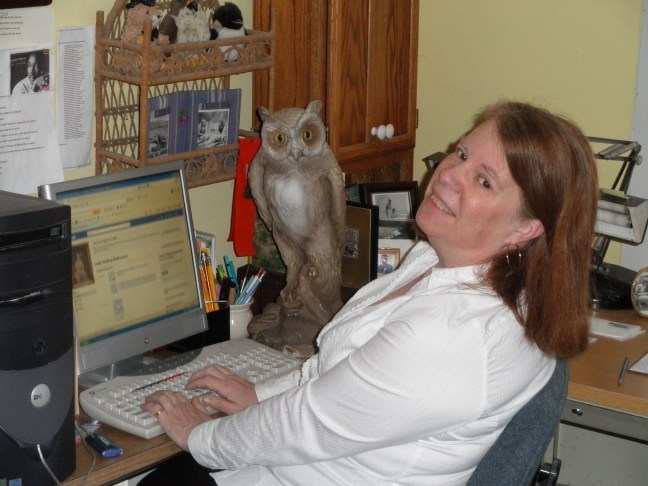
Fred Rogers had a character–an owl–called Hoot and this owl lived in a knot hole of a tree. I had never heard of knot holes; I had never seen a real one. So when we moved to Shady Ave. Ext. I examined all the trees, up and down the street, wanting desperately to find a place in which an owl could live. I never found one but other images rushed in to fill my head. I loved lily pads and lotus blossoms–again, I never saw these but they were probably in a book my mother read me. I never lost the child-like wonder in looking at these perfectly beautiful water plants. Now, when I’m 60 years older, I live in the country and right down the road is a large pond, covered with lily pads and lotus blossoms. When I looked at Claude Monet’s astounding series of paintings of water lilies–in a book, of course–I knew that I wasn’t alone.

Now this one is really weird; it sounds weird anyway but I’ve since learned that fascination with fire was appropriate to nine year olds. My two friends on my street were the same. Everywhere we went I looked at houses to see if they had chimneys. Then I would try to figure out if maybe these houses had fireplaces. This was so long ago that it doesn’t matter anymore; but the three of us who played together went through a period of starting fires. We really were irresponsible but we tried to find out how tough we were. Finally, we were caught, and I’m glad we were without creating a disaster.

Pittsburgh Experiences/2-2

2

What I just wrote may not apply to every child. I’m sensitive and I read a lot of books about nature and I felt an expectancy about the world around me. Objects and places that caught my attention would probably not appeal to everybody.

My grandmother–my mother’s mother–lived in the Morrowfield Apartments, close to her sister and other family members. So I was at the Morrowfield a lot. It turned out that if you rode the elevator to the top floor, you walked down a long, dark hall at the end of which was a door. You open the door and you found yourself on the roof of the Morrowfield. I found this thrilling beyond words. Ladies sat there in the sun, talking and laughing. When my cousin Maxine would come with me we were both in a world of our own up there. Only three or four years old, we were cautioned, over and over, about getting too close to the edge. Very scary indeed. But mysterious like Alice In Wonderland.

There was another mystery at the Morrowfield. At each elevator stop was a small table with flowers and a painting. What a thrill to discover that one of those paintings was done by my Aunt Cecil. It was a still life of flowers in a bowl. When I say it was a thrill, it was actually more than that. Another link in the chain of the Other World, one of unexpected connections that made up Pittsburgh.

Also, where we lived then there was a triangle made up three streets: Shady Ave. Ext., Ludwick Street, and Landview Street. One day, when I was very young–this was before kindergarten–my mother packed up my sister into her carriage and we took a walk. It was there, on Ludwick Street, that my mother showed me the secret lane. It was way too narrow for cars to pass through and was bounded on either side by a wire fence. A flower grew there called Bleeding Heart and my mother showed me the heart-shaped blossom that really did appear to be bleeding. The lane connected Ludwick with Saline Street below. That’s where the black stone church stood with its ancient graveyard.

This was my world–a triangle of streets, the secret lane where Bleeding Hearts grew, the silent, ancient church and tiny cemetery. As I write this I don’t think I’m doing a very good job of conveying the mysterious haze that hung over my early life. Maybe some things can’t be put into words.

I’m going to end this with a very nice and sweet story. When my mother was living at Concordia House, a lady called Rose Field lived there also. Mrs. Field was one of the mothers who lived on Shady Ave. Ext when I was growing up. She told me that her son said the following: I’m not having kids until I find a place like Shady Avenue Ext.

I know this feeling only too well. When we lived in Media, PA and life was NOT like the place I loved, I grieved and cried because I thought Michael wasn’t getting what I got where we lived. But so much for worrying…he was a quiet, solitary child as brilliant children often are. They need time alone to process their thoughts. So even on Shady Ave. Ext. he would have been exactly the same way!!!

Pittsburgh Experiences/2-1

Mystery

1

This is a difficult idea to express; however, I’m going to take my time and at least try to explain.

I grew up in the 1950s–yes, I’m a baby-boomer–and 1(I lived on a dead end street; 2)nobody on our street had extra money for toys, games, and amusements.

Furthermore, our mothers were all at home and every mother had the same ideas on child-rearing. We had to be outside playing except when we were at school,rain was falling, or one of us was ill. Even in the snow we threw snowballs at each other.

Combining all of these factors will bring the reader to a conclusion; the bunch of kids I grew up with were thrown onto our own resources to pass away the hours out of doors. Because of this we were exposed to the natural world. We didn’t look at the world through a window, then turn back to playing video games. My mother–all the mothers on Shady Avenue Ext.–would be shocked at the way in which children are raised today.

What am I driving at? I do not mean to preach. But having few toys and being outside so much, we noticed things. Odd things in nature, for example. There was a weed called plantain that grew in the strips of land between the sidewalk and the street. From a three or four leaf base a stalk grew that had easily detachable seeds. We moved up and down the street like a little tribe of hunters and gatherers, collecting seeds. Our mothers gave us cleaned out mayonnaise jars in which we stored the seeds. The seeds were the center of our games of “store,” “farmers,” and “playing house.”

This is only one example of what our world was like then. Where does the mystery come in? I don’t like to use psychobabble terms but none of our mothers were “helicopter mothers.” We were free to roam as long as we didn’t cross Beechwwood Boulevard. So if you are free to roam, imagine things, and make things up, the mystery of the natural world becomes accessable. This leads to a deeper and more profound sense of the Other World.

Pittsburgh Experiences/1

I’ve been going through my books. The area in the house that’s devoted to my bookshelves has looked–to me, anyhow–dusty, books jammed in at odd angles. So I’m doing a huge reorganization of all the shelves.

In going through this heap of books I’ve found photos, worn out paperbacks that are slowly disintegrating, a huge envelope full of poetry that I wrote in the 70s–and it is so embarrassing that I only read one poem and bundled the fat envelope away, on a bottom shelf. It’s obvious that I hadn’t found my “writer’s voice” yet.

I forgot that I had been going through a phase of wanting to learn more about Pittsburgh history; I have a small collection of books about that. They were all interesting but for some reason that only my heart knows, I put them on a shelf that’s hard to see. I’m enjoying living in the present. I remember an interesting fact that I learned from one of those books; where we lived, on Shady Ave. Ext., was one of the oldest parts of Pittsburgh. When my friends and I would play in the spooky cemetery that’s next to a gloomy church nearby, we didn’t know that this place was the oldest church and churchyard to be established. And of course Brown’s Hill Road led straight to the Monongahela.

It’s a known fact that we can live in a place and not see or notice many aspects of it.

I’ll start out my Pittsburgh Experiences Series with this story that I read while going through my “learning about Pittsburgh” phase. In Philadelphia, life was refined and like the cities in Europe, had the best culturally. (Not all of life was “refined” there, obviously. But there were “nice” places to live,” “good restaurants,” and music.)

If a man met a woman in Philadelphia and wanted to marry her, it was assumed by the girl’s parents that the couple would reside in Philadelphia. But there’s a story about a man meeting a woman and wanting to “take her to Pittsburgh.” Shock and outrage on the part of the parents. Just traveling through our still heavily-wooded state was at best, a nightmare. No roads–maybe a few paths to follow–the trip would take days, maybe weeks. Then once arriving, this sheltered young girl would find a city in constant turmoil, public drinking, fighting, brothels. Called the “Doorway to the West” because ambitious men going west, tough fortune-hunters, trappers and more would use Pittsburgh as a base of operations and a place to buy guns, ammunition, foodstuffs–it was “diametrically opposed” to refined, relatively clean Philadelphia. In the story I read, the young lady found that she liked the release from stuffy society and her grateful, happy husband built her the biggest house in Pittsburgh at that time.

Country People/2

Our mailing address isn’t in Rohrsburg; it’s in Orangeville PA. The post office in Orangeville is tiny and never crowded.

The “postmistress” for a long time was Jenna, somebody I grew to like a lot. Whenever I went there she was nice and friendly and had this sort of aura for which I couldn’t find a name. It was something good; it felt warm.

I figured out what it was about Jenna that I liked. Whenever I had a complicated post office errand to do, like sending a heavy envelope to a friend, and certain forms had to be filled in she’d say: Now, just do as I say. Put the name of the person you’re mailing to on that line; fill in their address. OK? Now. put your signature there. OK? And she would go on like that in a soothing way. Not that mailing something is that big of a deal. However, once I asked her if she had kids. Yes, she did have several children.

“You sound like a mother, a mother who is good to her children, and who helps them when they don’t know how to do something.”

Jenna liked that. She told me that nobody ever told her she sounded like a good mother, and she was very happy.

Country People/1

When you drive north from Philadelphia to come to this place where we live now, you have to go through the Lehigh Tunnel. Before the tunnel everything looks like suburban Philadelphia. When you come out the other side you’re in a different place. Even the sky and air are different. This is how I fell in love with Rohrsburg.

I’ve met a lot of people here. I’ve not become very close to most of them but that’s not the way things are done. Most people here work too hard for survival’s sake to go to parties and have lunches out and then go shopping.

This area has always been economically depressed; it’s worse now than ever. So the young people are leaving their homes to get jobs.

However, this is just a very short introduction to a series of portraits of some people I’ve grown to love while living here.

The Kile family owns a small farm which is just down the road from us. All through the spring, summer, and autumn they sell what they grow–corn, tomatoes, peppers, pumpkins, beets, rabbits, and more. We always buy our eggs there.

Doris Kile is the ruling matriarch of the Kile family. You don’t meet people like her in cities or even towns like Bloomsburg. Physically small but unbelievably tough, she never gets sick, drives herself unmercifully, gets up in the summer at 3 AM to pick corn. All she sells is delicious. Here’s how our relationship with the Kile family began. Peter began stopping there to get eggs and see what the produce looked like. And Peter being Peter, he started chatting with Doris and soon they were friends. Doris’ husband, Alan, is a grumpy old man who hates almost everybody and walks around with a scowl on his face. I was afraid of him. Peter kept urging me to stop there and make friends with a nice neighbor. In matters such as these Peter’s usually right. So now Doris and I are friends. I have a special story about Doris which I will leave for another time.

Three stories related to the Kile family:

1) Bill Kile, their son, is our accountant and his wife, Ella, alters clothing for me. Believe it or not, she only charges $2 to hem dresses and jeans. They are all very devout Christians and live their faith. They never try to convert us and I am sure we are the first Jewish people they’ve ever met.

2) One day I went into Doris’ kitchen and found her and one of her grand daughters playing a card game. I noticed that Doris’ hands were dirty and I was quite surprised until I looked again. Doris had been growing things so long that dirt had embedded itself into the pores of her skin.

3) When we would go away, Doris and Alan would come over and take care of our dog Homer. Homer grew to love them and they loved him. Now, I mentioned that Alan Kile is a grouch. One day I stopped at their place to get eggs and Alan was standing there, frowning at me. I said to Alan that I was Leslie Mastroianni and didn’t he know me? No, he didn’t recognize me. So then I said–Homer’s my dog. Remember him? Alan began to smile at me and after that we all became friends. When Alan was in a nursing home for a hip replacement, I visited him and brought him the Sunday paper and chewing gum. He thought that was funny.

Peace and Love/25

3. What Am I Like Now With Regards to Solitude?

I left that time with a feeling of being solid. When I met Peter, practically the first thing I told him was that I needed solitude with which to function and I don’t like being put on a leash. He welcomed that because he was like me. He wanted to love and have a partner but he needed that partner to understand him. Just like myself.

As time passed I grew to rely on my brain to send me good thoughts IF I RESPECTED IT. That meant giving it time and space to sort out the universe and what it meant. Through the years Peter and I have been members of different groups of friends–most married couples experience that. But all those people have divorced. split off someplace and gone, as if they never existed. Now, at this point in our lives, living in a rural area, we have all the solitude we need and we don’t like spending a lot of time with others. That sounds awful but the truth is that after sorting out all of our experiences we have peace. Sometimes I feel actually physically connected to this house and land. I become unbelievably homesick if I’m away for more than two nights.

At this time, now that I’ve figured out some basic things about myself, I like being who I’ve become. The major part of this, the part where everything springs from, is that I now trust my brain to make decisions after pondering issues. Pondering is the correct word. It isn’t serious, conscious thinking. I can drive myself crazy like that, and I have done this on many occasions. But there’s peace because again–I already stated this–I can trust what’s going on just beneath the surface of consciousness. My writing is the best example of this. My writing writes itself with little conscious help from me.

End of Peace and Love Series.

Peace and Love/24

2. What Solitude Meant To Me

After a chaotic period of time in my early life, when things got so bad that my mother kicked me out of the house, I finally got set on my feet again. A family friend found me a job and I found, by myself, a little and perfect place for me to live—just me, nobody else.

When I started out there I was numb from misery. I couldn’t feel much except a sense of self-loathing. I was smart, pretty, and nice–at least I thought so. How does a young woman like me end up like this? It felt like a tragedy; what would become of me? I didn’t even give my mother my telephone number for weeks.

It was the writings of DH Lawrence that helped me turn myself in a new direction. He wrote poems, essays, and parts of novels devoted to the joys of being alone, just yourself. I pondered this. What had the world dealt me so far? Let’s not even get involved in that. What I needed to do was look within for strength and comfort, not to the outside world.

Then came the good days of long wanderings through Oakland, spending weekend time in the big library, listening to the kind of music I loved. I wasn’t interested in classical music at the time. I had one Gordon Lightfoot album that I must have played every day at least once a day. I think it was Cold On The Shoulder. It seemed as if every song on that album had something just for me. The good days included making peace with my body, no small feat because just about every woman I know hates her body. How did I do this? I boycotted the big department stores and only wore men’s clothing. I looked quite odd indeed but at least I knew I WAS odd and my clothes reflected who I was.

More “good days” included buying food I liked and eating it with dignity. In the beginning I bought all kinds of weird foods, unable to think, one day starving myself and never wanting to eat again, the next day making up for yesterday with overeating. No focus, not feeling anything…

There were good times other than these but the most important detail in this story is that I knew, although I was hurting, that I was growing. I knew what I was doing was good. I used to say to myself that I was building a new structure or a new platform on which to live. And it turned out that I was right. I emerged from that span of 18 months with new energy; and I met my husband soon after.